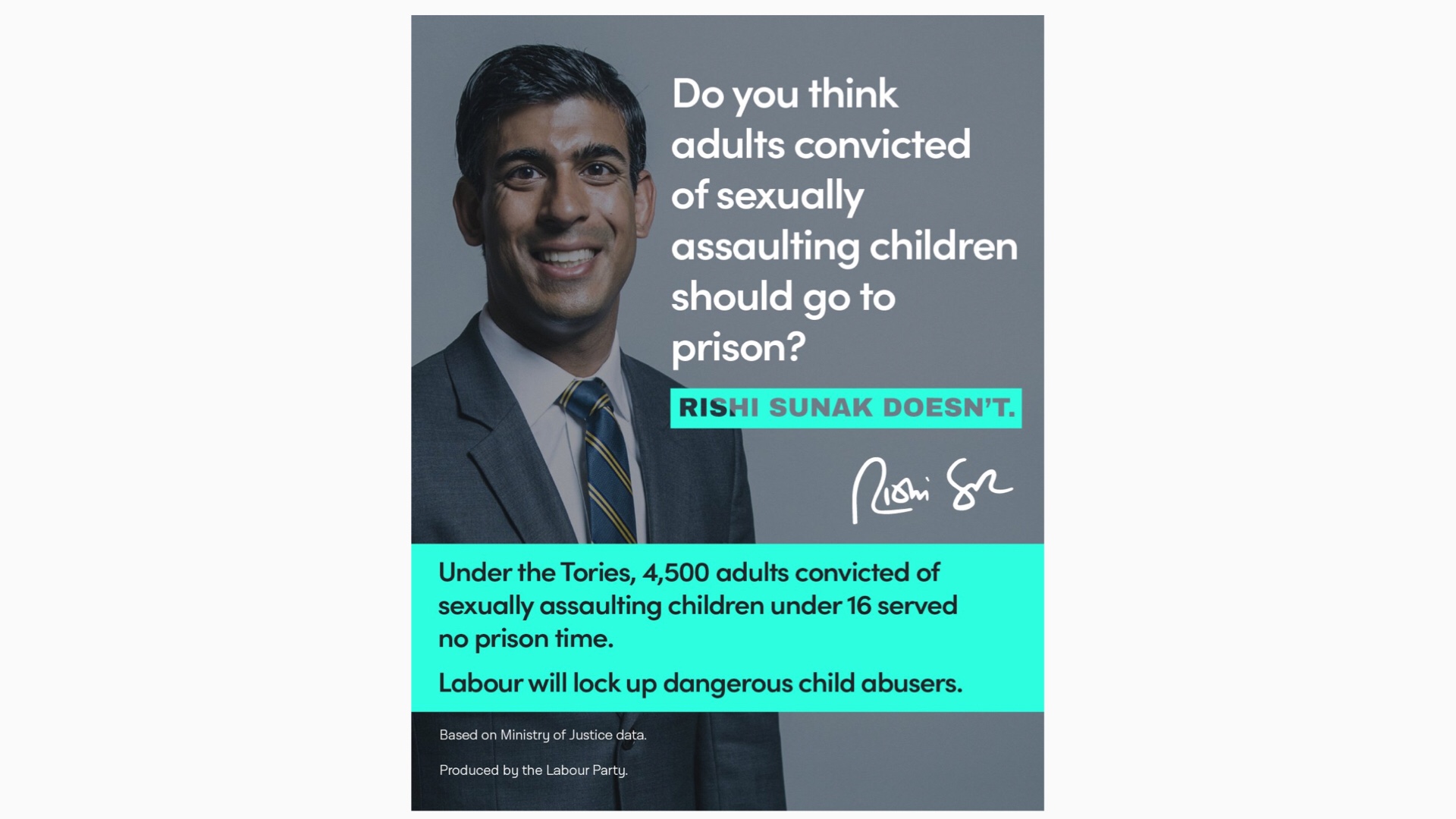
Opinium have done some polling for The Observer on the Labour attack ad which caused a stir over Easter. There’s several interesting findings.
36% of those it polled had seen Labour’s ad. This is good and is a big reason to go negative.
Research shows that attack ads are more likely to cut through for two reasons:
(1) “If it bleeds, it leads”; the media are more likely to repeat an attack – giving it greater reach – as it fits in with journalistic norms of highlighting conflict.
(2) Research on negative ads shows they are more likely to get noticed and remembered. This is because negative ads trigger an emotion (e.g anger / fear) which mean we notice and remember them more easily.
The ad made 17% of those polled feel less favourable about the Conservatives, but also 12% feel less favourable to Labour. A net gain, which is good.
But 39% said they thought Labour’s ad was fair and 43% thought it unfair. So it was seen to be net unfair.
A reasonable hypothesis is that were the ad deemed to be have been more fair, it would likely reduced the level of backlash and so had a better net outcome.
With any campaign attack there is an element of backlash on the sponsor; so any negative messaging has to be designed so that the net outcome is favourable.
The way to do this is to only ‘go negative’ on issues where the audience is predisposed to the message.
Put simply: negative campaigning works best when used to remind voters of what they already think.
 politicaladvertising.co.uk