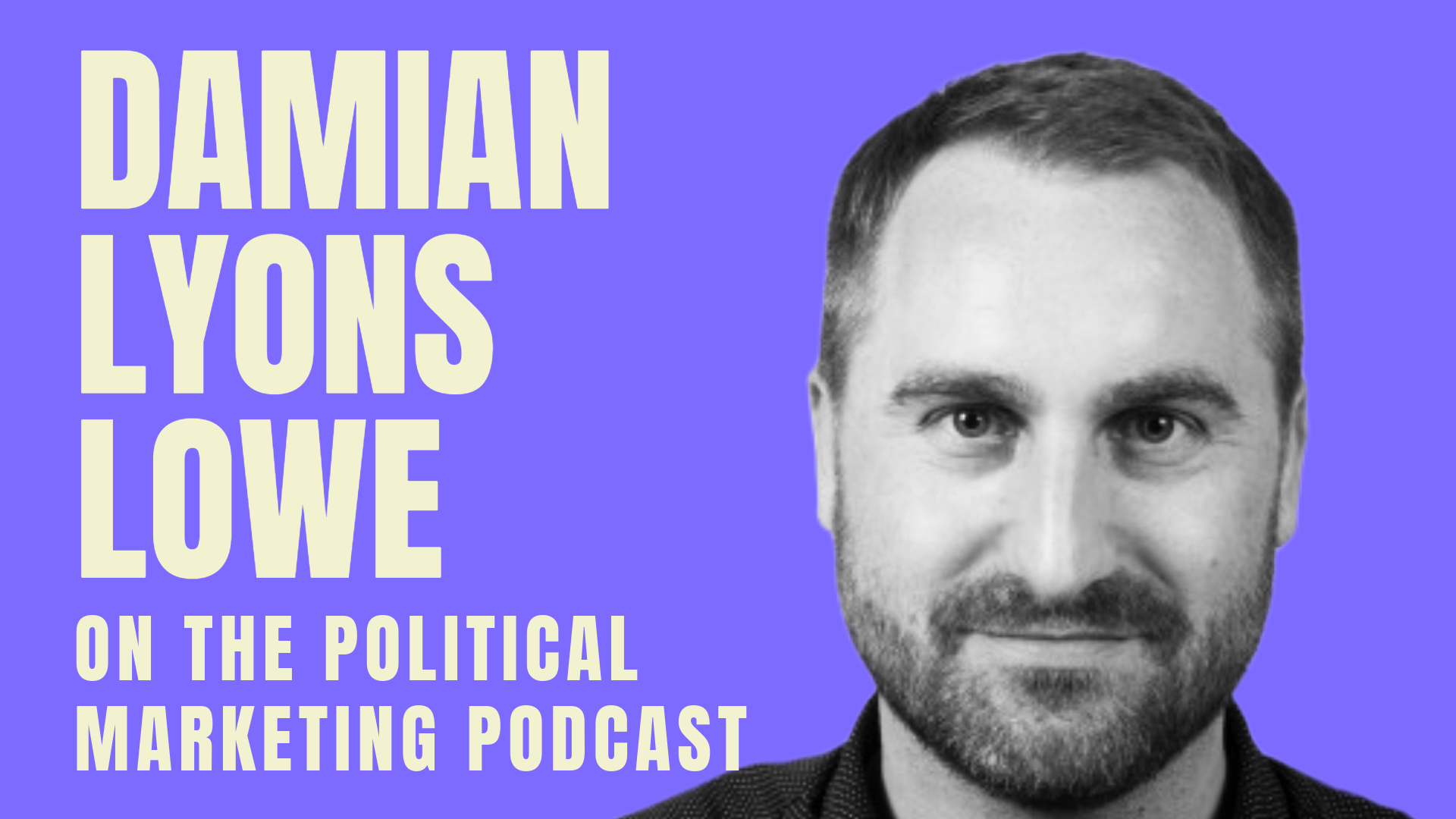
In the most recent episode of The Political Marketing Podcast I had the privilege of sitting down with Damian Lyons Lowe, CEO of Survation, one of the UK’s most influential market research firms.
Our conversation peeled back the layers on a fundamental question: What do political parties really know about voters, and how does that understanding shape their strategic decisions?
On one hand, you hear the argument that everything in politics is over-polled and focus-grouped to death, stifling genuine gut instinct. On the other, there’s the cynical view that political elites are operating in a shambles, relying on the same public information we all read in the papers. As Damian expertly put it, the reality is often a blend of both.
Beyond the Headlines: The Nuance of Political Polling
One of the key takeaways from our discussion was the critical importance of asking the right questions in polling. It’s not enough to simply test if a policy is popular. Damian highlighted a crucial point: you must consider a party’s credibility on a given issue and the potential for a policy to repel other crucial voter groups.
Take, for example, the dilemma faced by Labour. Should they go “hard” on immigration to attract Reform voters, or focus on issues like the NHS, where they have greater public credibility and less risk of alienating other voters? Damian suggested that a truly effective strategy needs to consider the broader context of all policies and their potential knock-on effects.
The Power of Segmentation: Understanding the Electorate’s Clusters
For any political campaign, understanding the electorate goes beyond simple demographics. This is where segmentation comes in. As Damian explained, it’s about grouping people based on their views, characteristics, and behaviours, using data to reveal distinct clusters of voters.
He gave the fascinating example of Green Party voters and explained that they are not a monolithic block. Segmentation can reveal diverse groups, from “Corbyn-type” economic socialists to “conservative-liberal environmentalists”.
Understanding the size and prevalence of these clusters allows parties to craft national messaging that doesn’t put off either segments, and deliver tailored local campaigns where one segment might be more dominant.
Tactical Voting and the Fragmented Landscape
The current political landscape is more fragmented than ever, with four parties potentially within 11 percentage points of each other. This has significant implications for how we interpret top-line polling and, crucially, the role of tactical voting.
Damian anticipates that in a close election, tactical voting will be even more prevalent, with voters often opting for the “least worst” option in their constituency. This makes seat-based forecasts (like MRP models) incredibly important in informing voters what’s at stake in their locality. It’s a complex dance where public sentiment, party strategy, and on-the-ground campaigning converge.
The Democratic Service of Polling
Perhaps one of the most compelling points Damian made was about the “democratic service” that polling provides. In the lead-up to the 2024 General Election, consistent polling showing a massive Labour lead arguably freed voters, particularly where Labour didn’t need their votes, to consider other parties like Reform, the Lib Dems, or the Greens. This allowed the public to react against the idea of a potential “one-party state”. In this sense, polling didn’t just predict the outcome; it became part of the electoral dynamic itself.
The Single Most Important Advice for Campaigns
If there’s one piece of advice to take from this episode, it’s Damian’s counsel to political strategy teams: Don’t just pursue a policy because polling shows it’s popular with your target group. Instead, cross-reference it with your credibility on the topic and consider the potential for that policy to alienate other voters. Think about the issue “in the round,” considering trade-offs and alternatives.
This episode offers an essential lesson in the sophisticated, yet often challenging, world of political marketing. It’s a must-listen for anyone seeking to understand the strategic minds behind modern political campaigns.
Listen to the full episode with Damian Lyons Lowe: available now on all major podcast platforms.
 politicaladvertising.co.uk
The ‘trade-off’ process in political policy development is one of those blindingly obvious concepts that I’d not grasped before this podcast. Rather naively I’d assumed you just put policy ideas into research and green-lighted the top box ones. Damian Lyons Lowe is clearly expert in this field of policy ‘trade-offs’ and it was so refreshing to hear him talk realpolitik.